Part 1 of 2 · Product design
The document is where the work lands
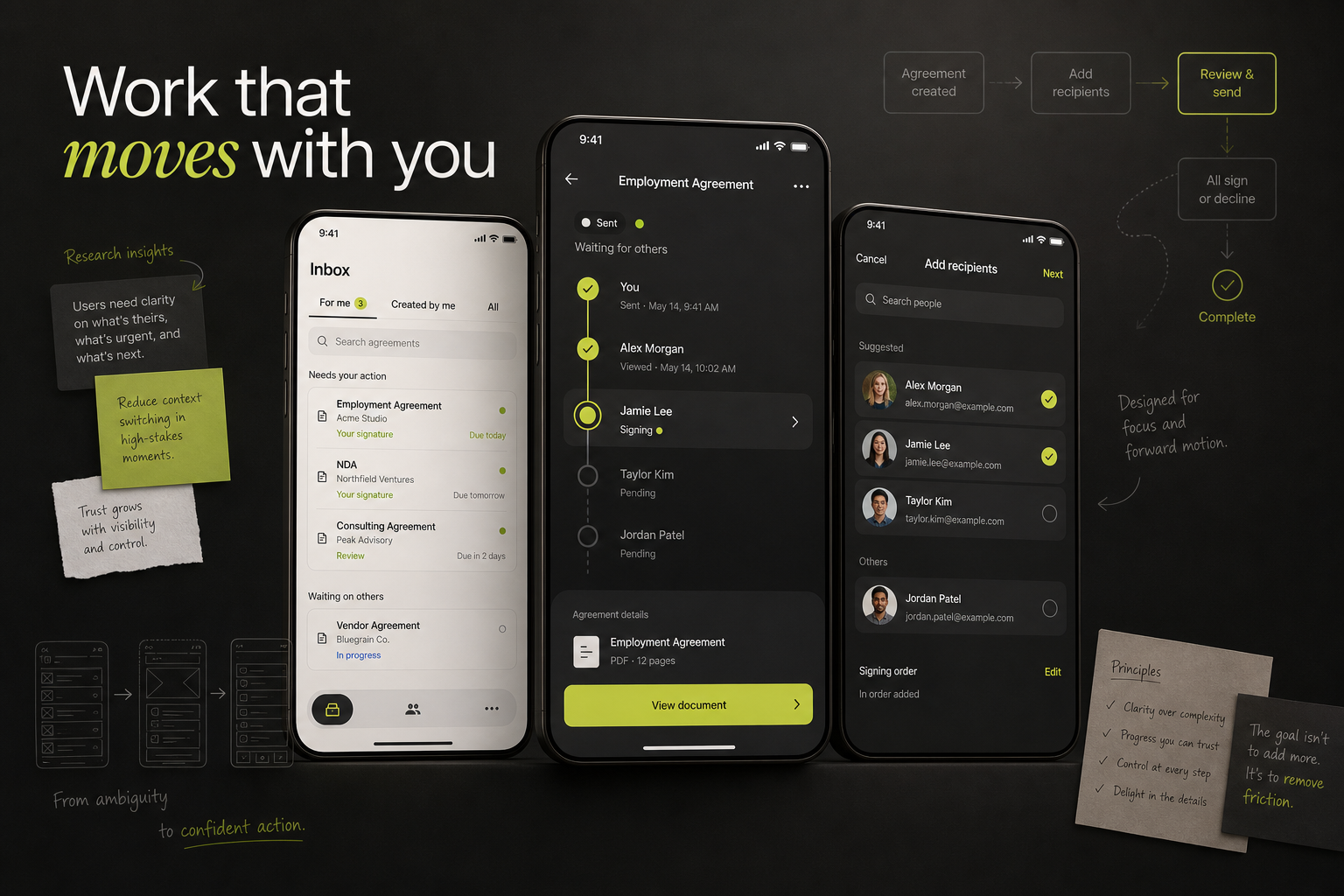
I explored how contract work could become focused on a phone without losing the record that makes each decision understandable.
The screen became smaller. The obligation did not. Reviewers still needed evidence before approval. Requesters still needed a paced path through document creation. Coordinators still needed to see who had to act next.
This was exploratory mobile work. Names and agreement details shown here are fictional. I do not claim launch or measured outcomes.
45 second summary
What I designed and what this story proves
- Problem
- Complex contract tasks had to fit a phone without stripping away decision context.
- Ownership
- I mapped the journeys, designed the interaction model, connected the prototype, and explored the visual direction.
- Scope
- Approval, document creation, signature setup, and signature monitoring.
- Evidence
- Connected source frames, explicit design tradeoffs, and a working browser prototype.
- Series
- Part 1 of 2. Part 2 proves the executable transition rules.
- Status
- Exploratory work with fictional names and agreement details.
- Limit
- I do not claim launch, user research findings, adoption, or measured business outcomes.
Act 1 · Context
A small screen, an unchanged obligation
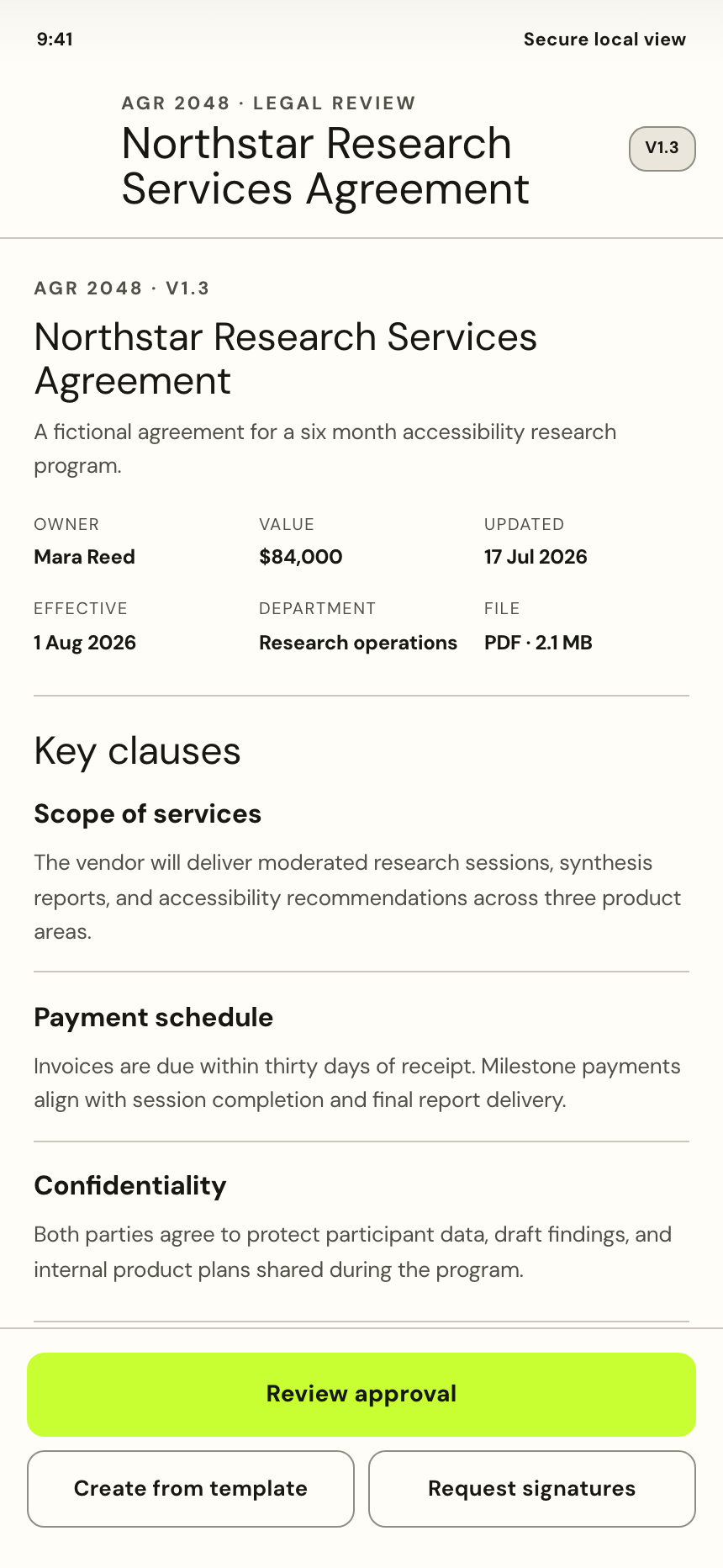
A contract record carries properties, clauses, attachments, versions, comments, workflow history, required questions, and signature progress. Mobile design did not remove those layers. It changed the moment each layer should appear.
What must be visible before a person acts, what can wait, and where should the person return after the action?
Professional services agreement
Awaiting approvalVersion 4 · Updated today- 01Current state
Ownership, workflow position, and the next available action
- 02Decision context
Required questions, value, risk, and responsible reviewer
- 03Document evidence
Clauses, attachments, versions, and comments
- 04History
Audit events, previous decisions, and signer timestamps
Act 2 · Architecture
Three departures from the document
The information architecture exposed one pattern across all three journeys. A person left the record for a focused task, completed an action, then returned to a record whose state now meant something different.
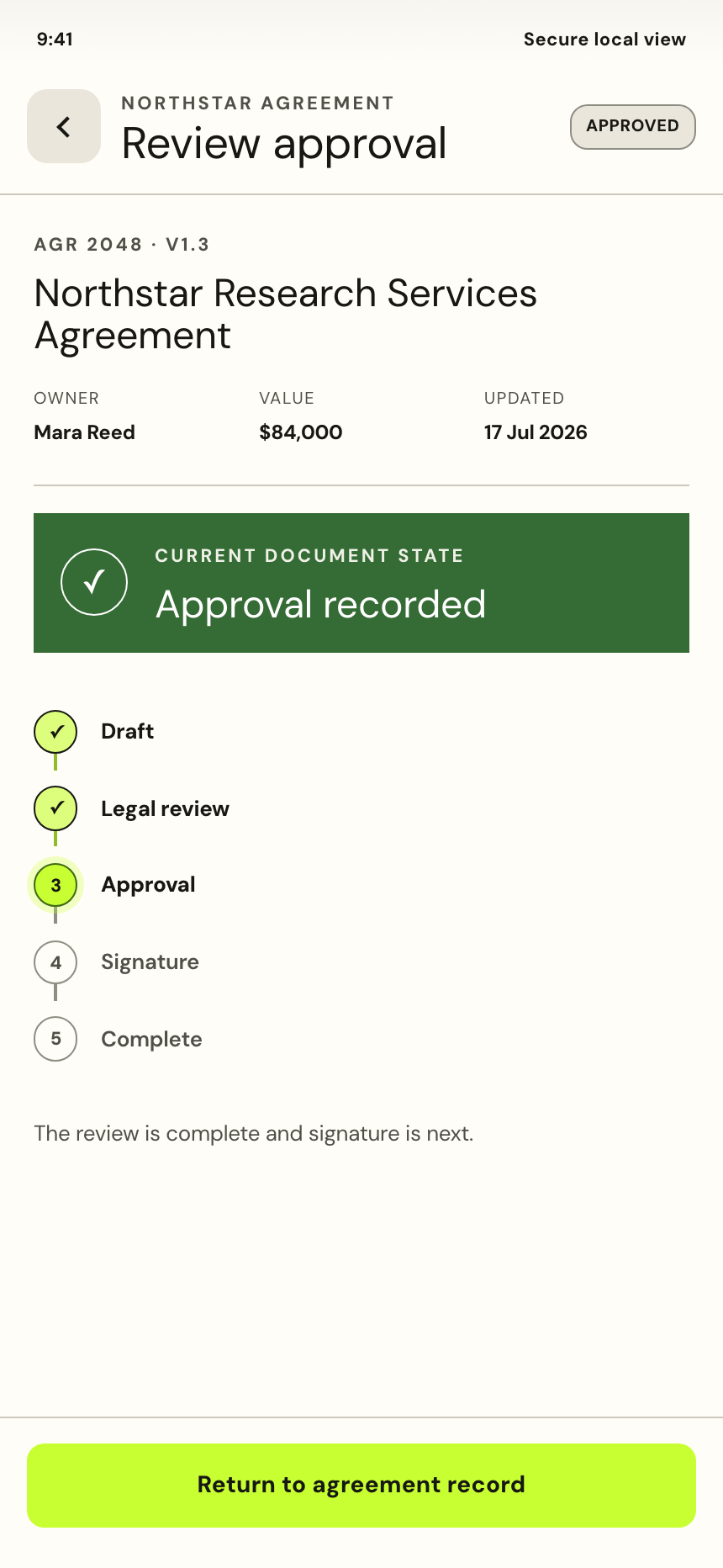
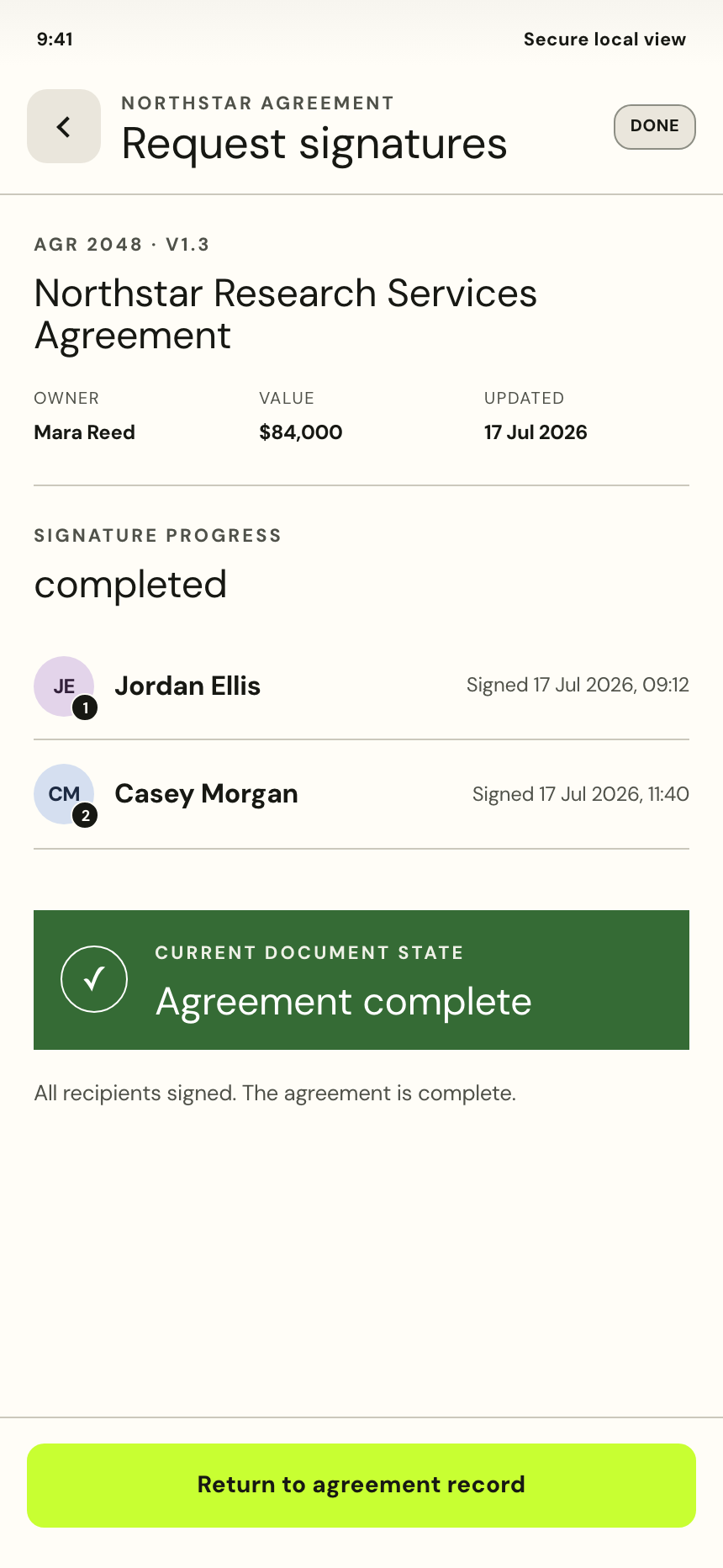
Approval returned with an audit event. Creation returned to a new agreement. Signature returned with responsibility, waiting, or completion made visible.
Context before action. Meaningful state after action.
Approval
- LeaveOpen assigned task
- ActRead context and answer required questions
- ReturnApproved record with a new audit event
Creation
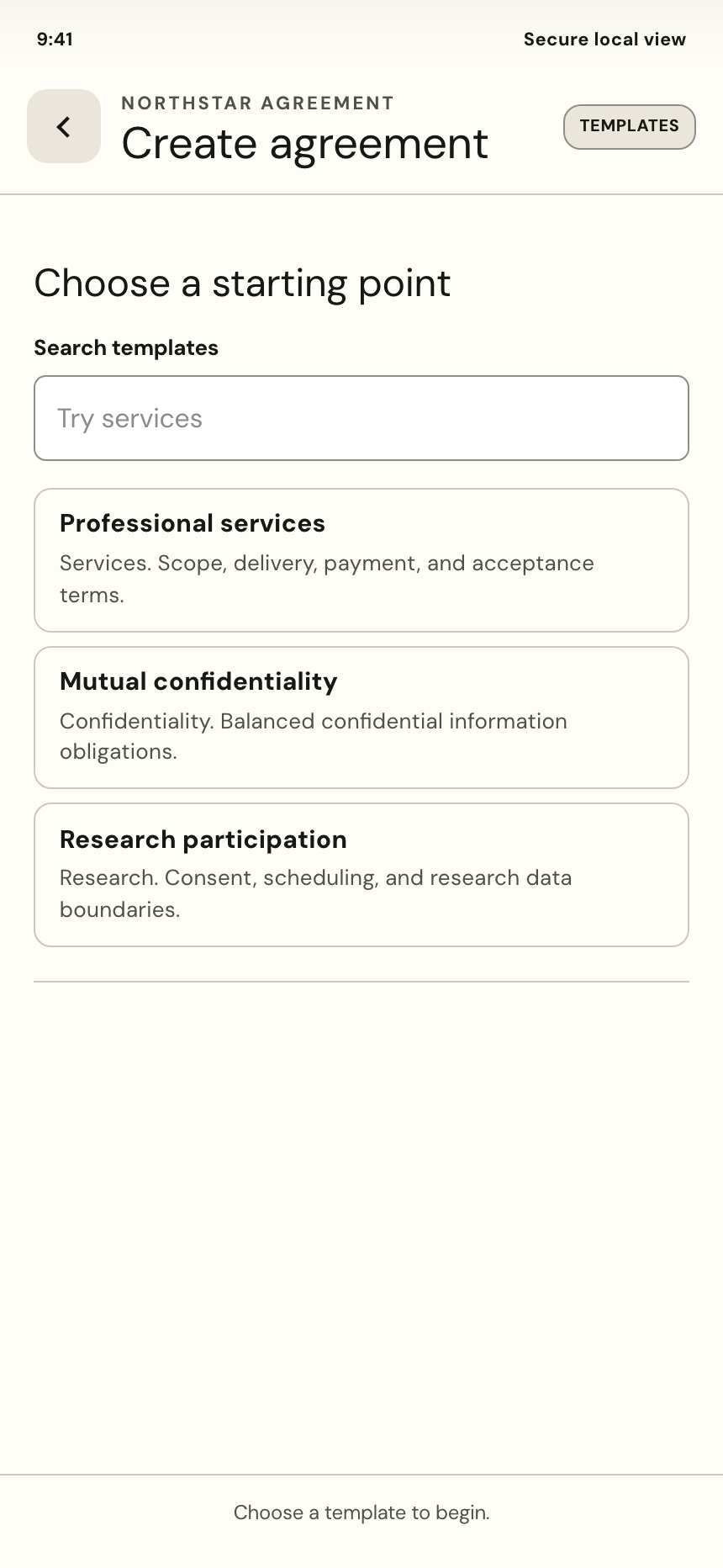
- LeaveChoose a template
- ActComplete focused steps and select stakeholders
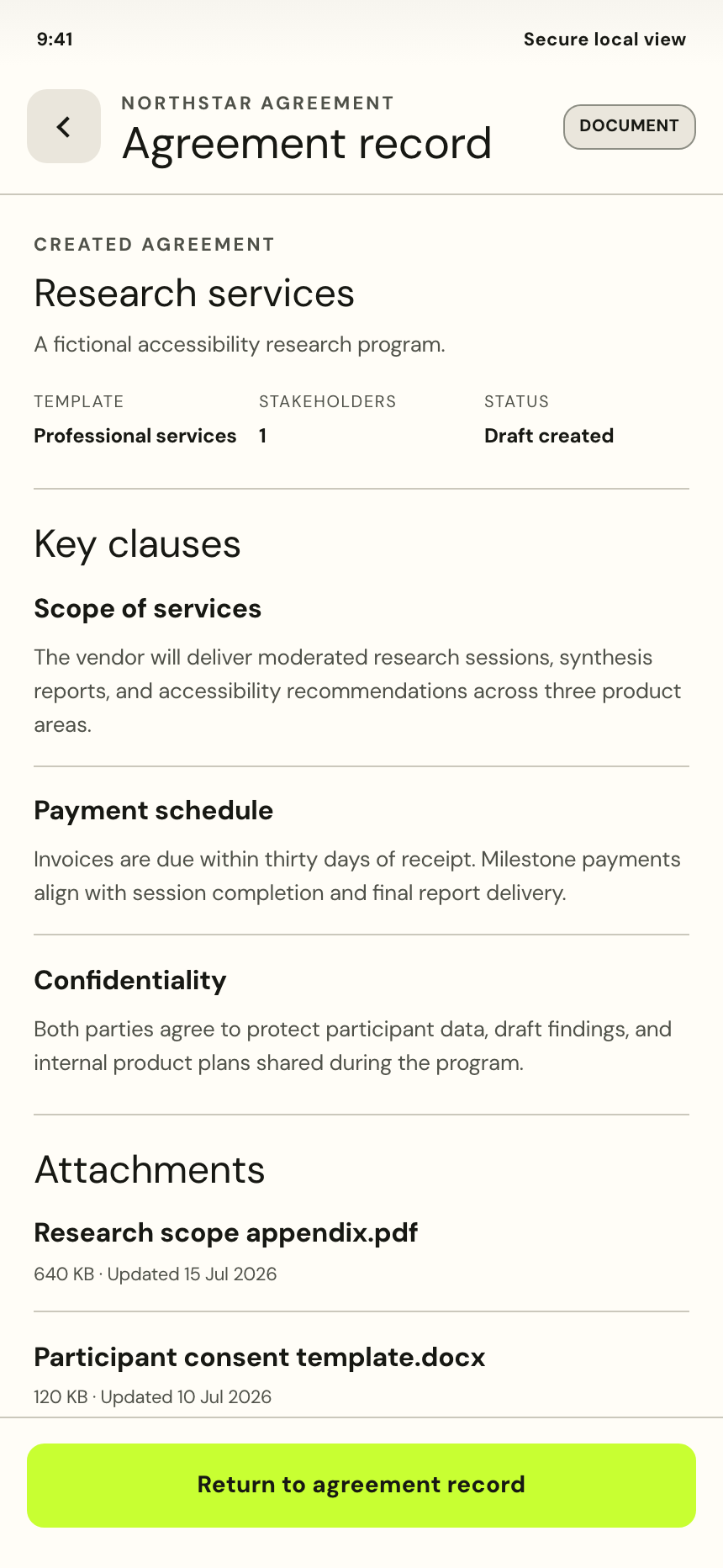
- ReturnNew document record ready for review
Signature
- LeavePrepare a request
- ActOrder recipients and monitor responsibility
- ReturnRecord showing waiting, declined, or complete
Act 3 · Primary decision
Context has a timing problem
Fully expanded records made the action compete with everything. Fully collapsed records concealed the reason for the decision. I chose a summary first sequence that led with current and changed facts, then revealed required context where it became consequential.
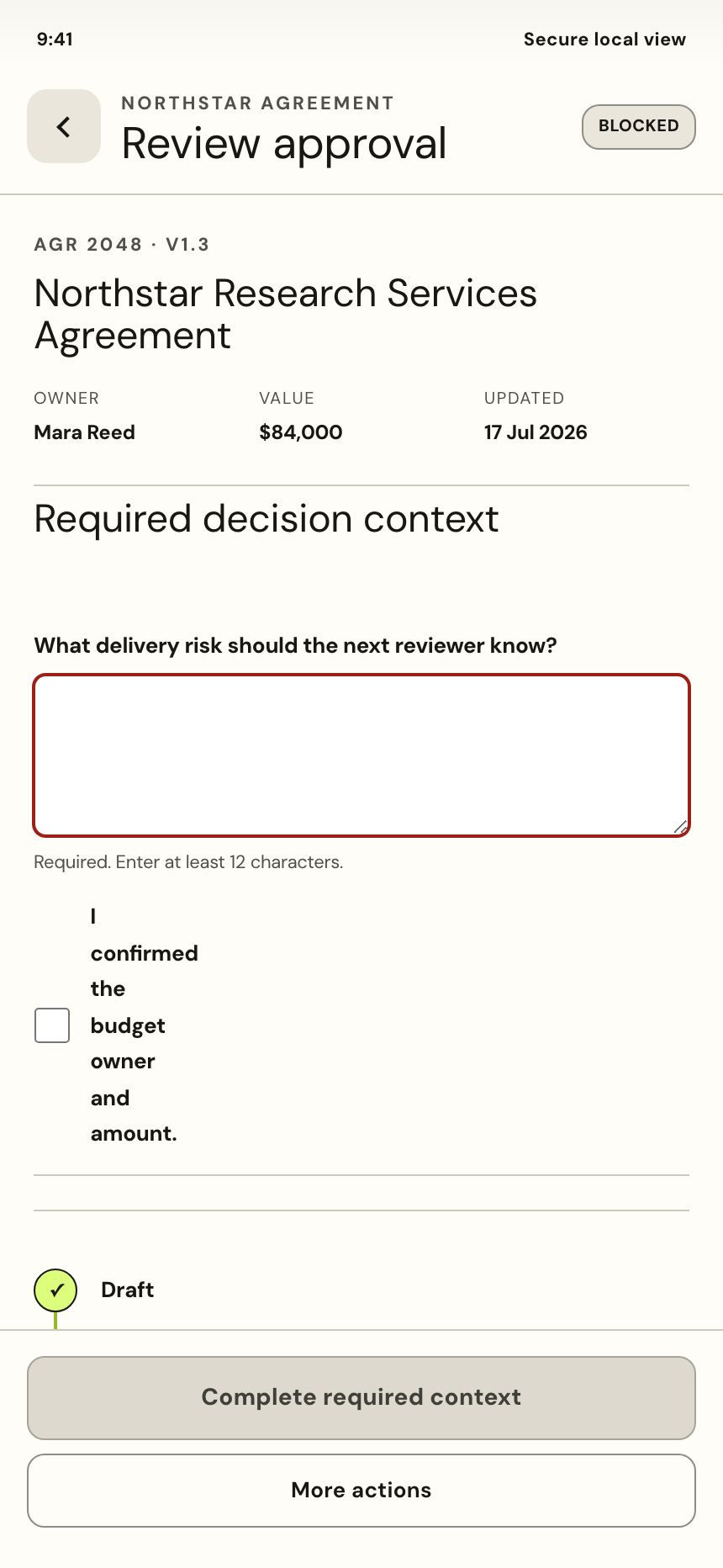
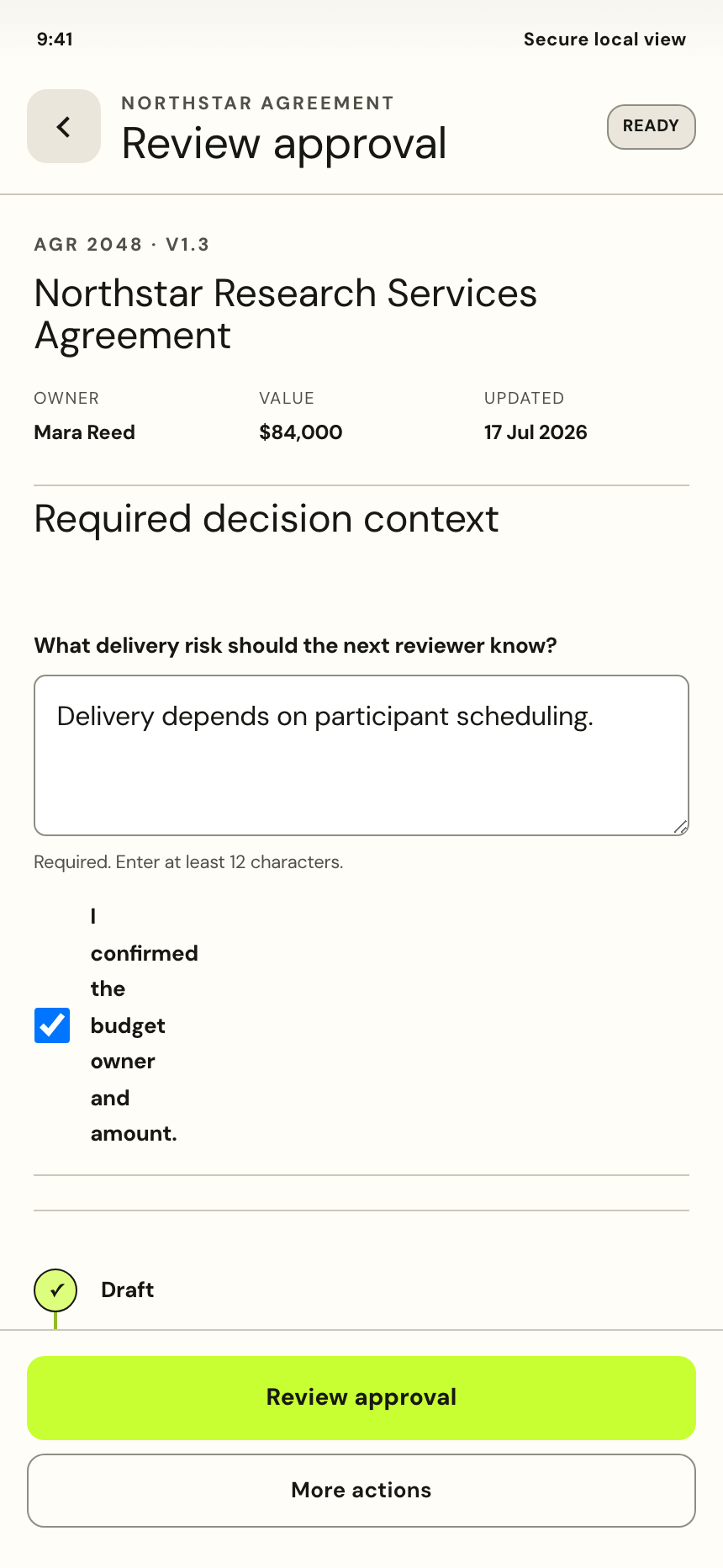
Approval became the strongest test. The action stayed unavailable until the reviewer accepted responsibility and completed both required inputs. The cost was one more deliberate step. The benefit was a decision whose context remained visible.
What should lead?
- Choice
- Current and changed facts
- Cost
- Secondary details need one more action
- Open risk
- A reviewer may still need the complete document
When can approval continue?
- Choice
- Only after required context is complete
- Cost
- The workflow can take longer
- Open risk
- Validation rules still need product definition
Where should completion land?
- Choice
- Back inside the updated record
- Cost
- The return state needs careful continuity
- Open risk
- Concurrent changes need server conflict handling
Act 4 · Generalization
Completion changes the place I return to
The same rule shaped creation and signature without forcing those journeys into the same interface. Creation needed pacing, progress, validation, and a resulting record. Signature needed visible order, current responsibility, reminders, and terminal states.
The shared behavior lived at the boundary. Each focused task returned to the contract record with a state change a person could understand.
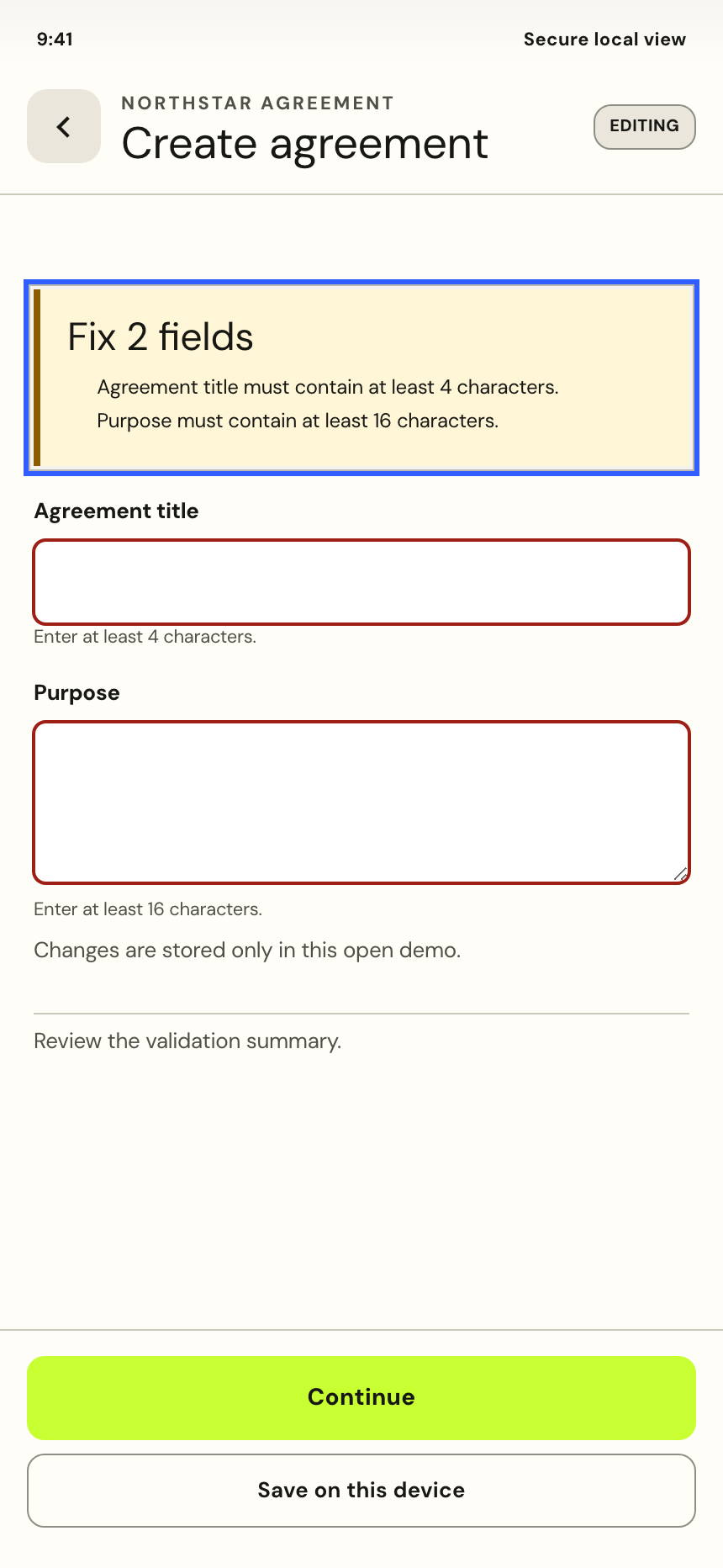
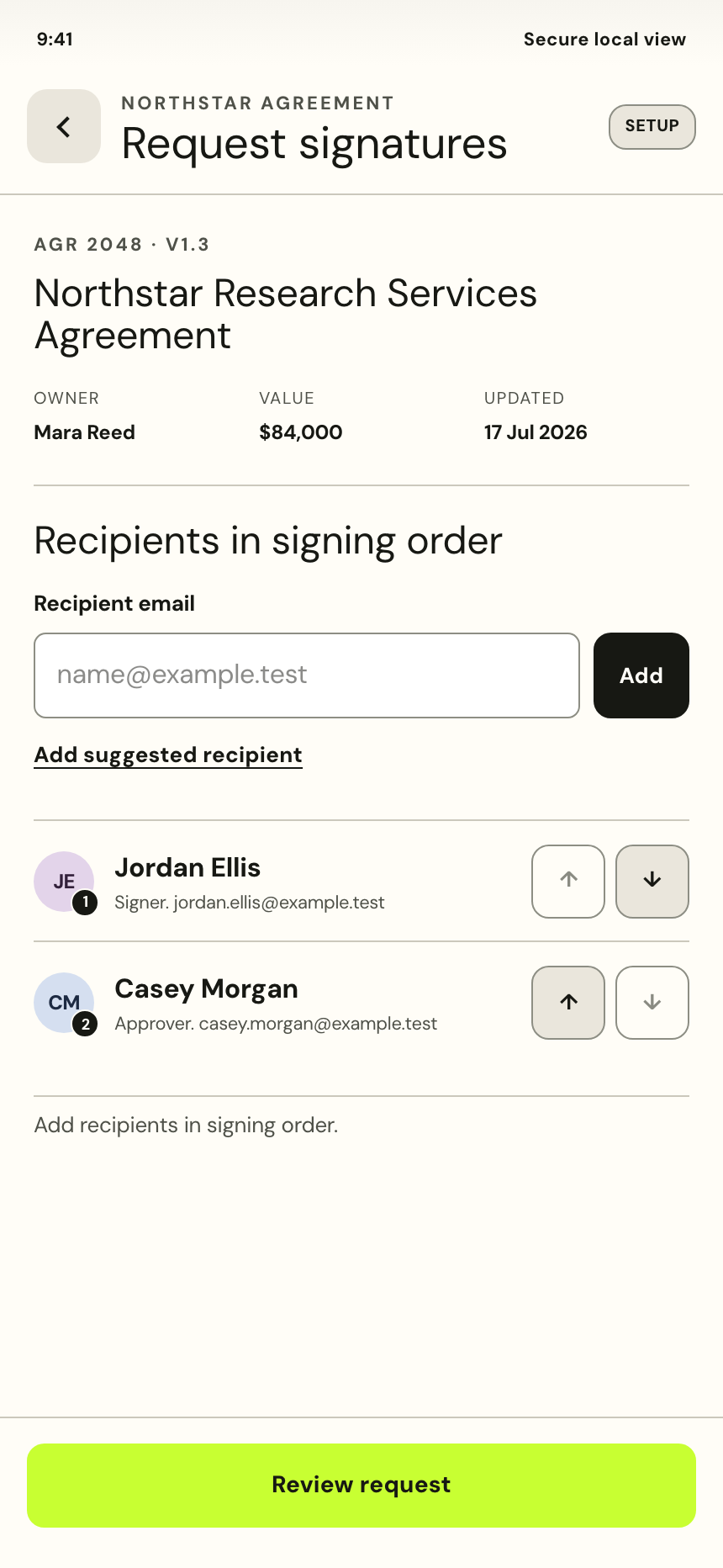
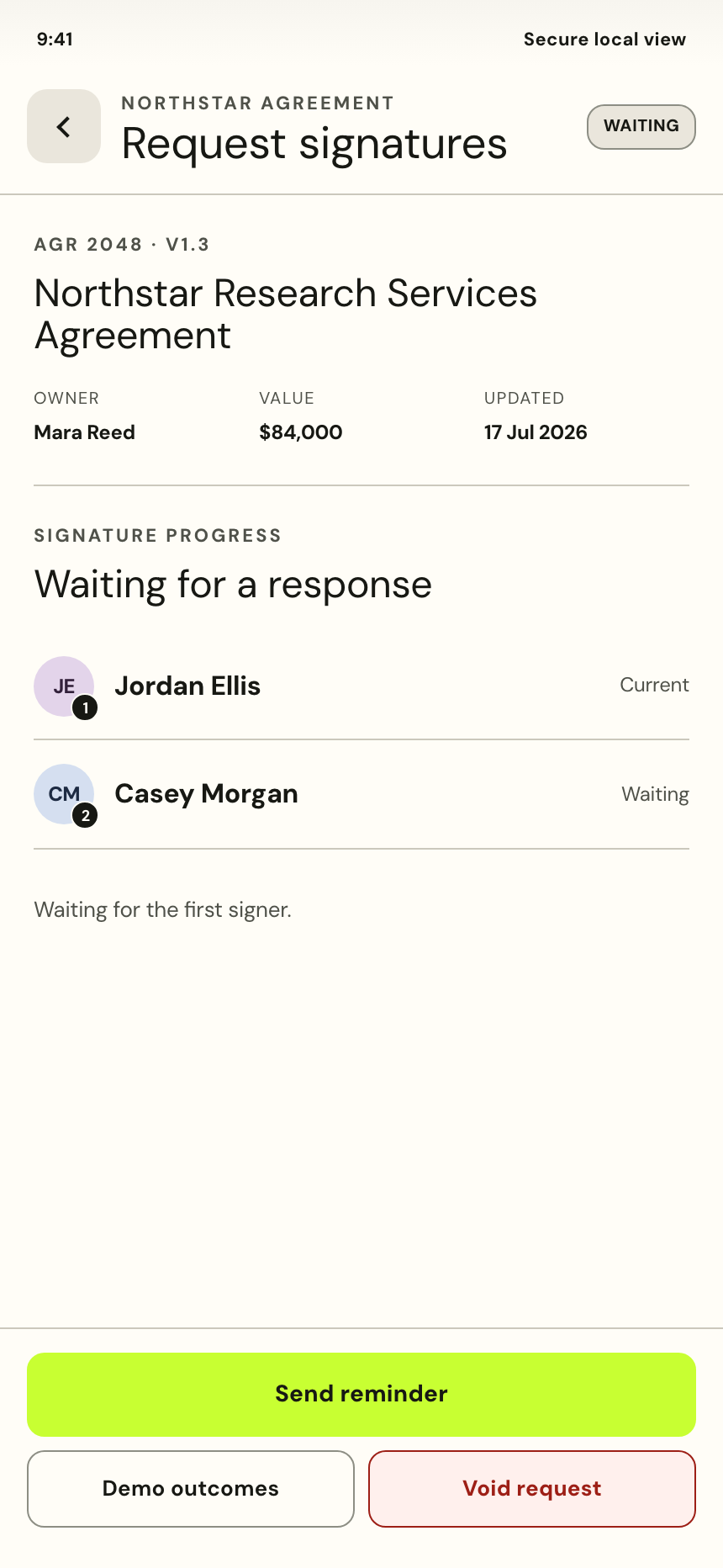
Part 2 shows how I turned these return rules into executable behavior.
Continue to design engineeringAct 5 · Honest boundary
The interface was still unresolved
The source file ended with one visual study, not a complete product system. It tested more editorial type, larger controls, more spacing, and a stronger primary action. I carried those ideas into the working implementation while keeping the source status clear.
Source study recorded in Figma
One screen tested a more editorial direction
- Larger serif headings
- More generous spacing
- Rounded search and stronger selection
- Off white surfaces with a clear primary action
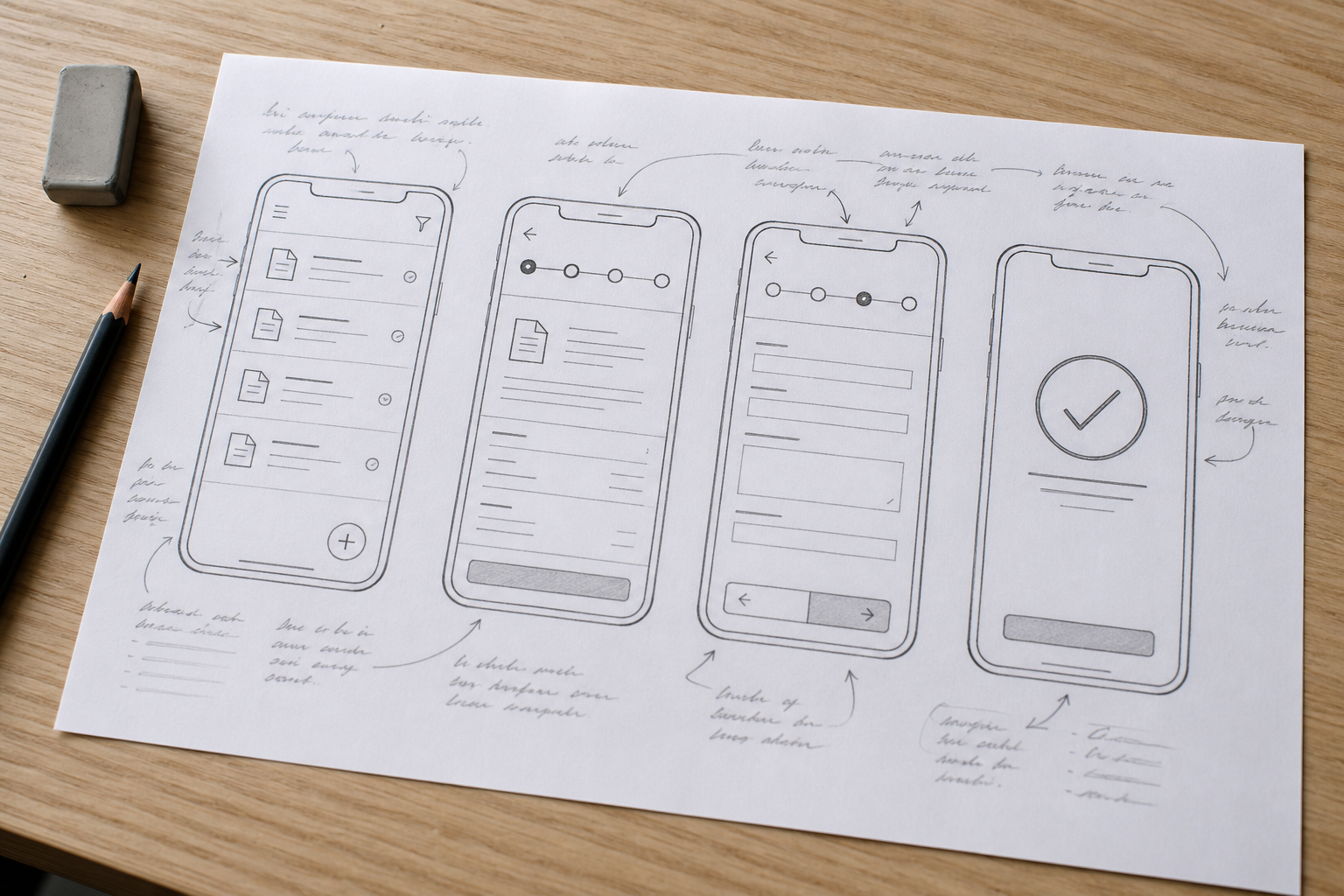
The original polish study image could not be recovered through the available export quota, so I am not presenting a reconstruction as source evidence.
Open questions
What still needed product definition
- Who can transfer approval responsibility and when?
- How should cancellation and reopening affect the audit record?
- Which questionnaire rules come from each workflow configuration?
- How should concurrent offline edits resolve against server state?
- Which signature roles and permissions belong on mobile?
- What measured outcomes would prove the model in production?